
Advanced O-Ring Assembly Machine Delivers High-Efficiency, Repeatable Sealing Component Production
Advanced O-Ring Assembly Machine Delivers High-Efficiency, Repeatable Sealing Component Production
Intelligent automated feeding, precision installation, and controlled assembly for modern industrial manufacturing
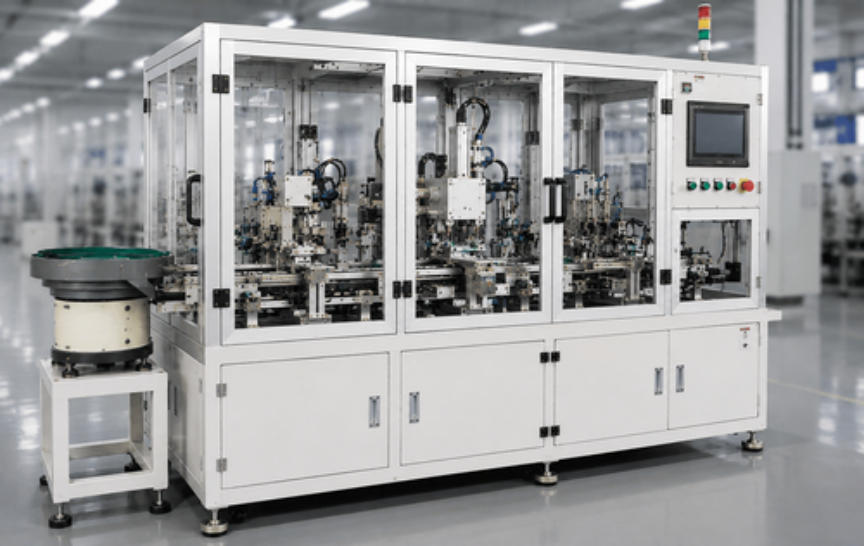
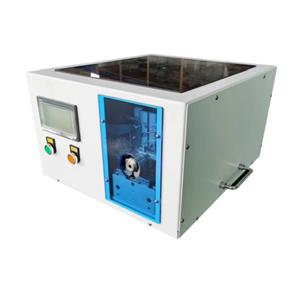
O-Ring Assembly Machine
A New Standard for Automated O-Ring Assembly
Industrial manufacturers are under constant pressure to increase output while keeping sealing quality stable from the first part of a production run to the last. O-rings are small components, but the quality of their installation can have a large effect on the reliability of valves, connectors, compressors, cooling products, hydraulic assemblies, pneumatic components, and other fluid-handling products. The advanced O-ring assembly machine addresses this production challenge by turning repetitive seal installation into a controlled and repeatable automated process.
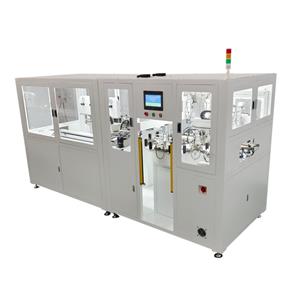
The O-ring assembly machine combines automated feeding, positioning, guided installation, and process management in one production platform. Instead of depending entirely on manual handling, the O-ring assembly system establishes a consistent sequence for each workpiece. The result is a more predictable production rhythm and a practical route toward higher automation for manufacturers that need stable sealing-component assembly at scale.
Why O-Ring Installation Requires Process Control
O-ring installation is often treated as a simple manual task, yet the process can involve several points where variation is introduced. The ring must be delivered to the correct location, the workpiece must be held securely, and the seal must be installed without twisting, cutting, excessive stretching, or incomplete seating. Lubrication can add another variable, especially when a production line requires a consistent amount of oil on every sealing component.
An automatic O-ring installation process addresses these variables by establishing a repeatable sequence. The O-ring assembly machine can coordinate feeding and positioning with the movement of the assembly tooling. This helps reduce operator-to-operator variation and provides manufacturers with a more stable process for large production batches.
Automatic O-Ring Installation Improves Repeatability
The central objective of automatic O-ring installation is consistency. Each cycle follows the same programmed sequence, allowing the O-ring assembly system to maintain repeatable timing and positioning. Automated handling can also reduce the amount of direct contact between operators and sealing components, supporting cleaner and more standardized production practices.
For production managers, automatic O-ring installation creates a measurable process structure. Feeding, positioning, installation, and inspection can be connected into one workflow rather than handled as separate manual actions. The O-ring assembly machine can therefore become part of a broader factory automation strategy instead of remaining an isolated assembly device.
Specialized Feeding for Oil-Coated O-Rings
A particularly important development is the ability to handle oil-coated O-rings. Conventional vibration bowl feeders can become unstable when sealing rings already carry oil. The oil changes surface friction and may cause rings to stick together, overlap, or move unpredictably. These conditions make conventional feeding methods difficult to automate reliably.
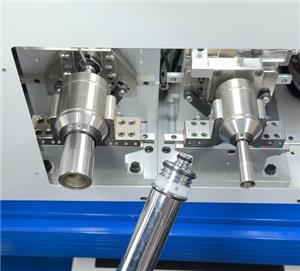
The specialized automatic O-ring feeding concept is designed for this type of application. The O-ring assembly machine can use a feeding structure adapted to lubricated rings, helping deliver individual components into the assembly process. This is especially valuable for customers that need to preserve a pre-lubricated O-ring condition while still achieving automatic production.
By addressing the feeding problem at its source, the O-ring assembly system expands the practical range of automated sealing assembly. Manufacturers do not have to choose between pre-lubricated components and automation simply because conventional bowl feeding is unsuitable for the material condition.
Precision Lubrication for Consistent Assembly
In applications where lubrication is applied during assembly, uniformity is an important part of process quality. Manual lubrication can vary with operator speed, application technique, or the amount of lubricant used. A controlled precision lubrication stage can help standardize this part of the O-ring assembly process.
The precision O-ring assembly approach combines controlled lubrication with guided installation. The machine can be configured to manage lubricant placement and then carry out the assembly sequence under repeatable conditions. For production environments with strict expectations for lubrication consistency, this can reduce process variation and simplify quality control.
The combination of an automatic O-ring feeding system and controlled lubrication creates a more complete O-ring assembly solution. The sealing ring arrives in a consistent condition, receives the required lubrication process, and moves into the final installation stage without unnecessary manual handling.
High-Speed Production for High-Volume Manufacturing
Manufacturing economics increasingly depend on how efficiently repetitive operations can be performed. The O-ring assembly machine is designed to support continuous automated production, helping reduce the time and labor associated with manual sealing-ring installation. Product information for this equipment indicates an efficiency of up to 1,200 pieces per hour, depending on the application and production configuration.
High-speed operation does not remove the need for quality control. Instead, the purpose of automation is to maintain a stable process as production volume increases. The O-ring assembly system coordinates feeding and assembly movements so that production can continue at a consistent rhythm. This makes automated equipment particularly relevant to factories that need both higher output and repeatable quality.
Quality Stability Across Every Production Cycle
A dependable sealing process begins with repeatable component handling. The precision O-ring assembly machine is intended to reduce common assembly problems such as missing rings, incorrect placement, and inconsistent installation. Sensors, positioning mechanisms, and controlled tooling can be integrated according to the product requirements.
For customers using an automatic sealing assembly machine, consistent process conditions are also valuable for downstream quality control. When the installation process is standardized, inspection systems have a clearer baseline for identifying abnormal results. This allows manufacturers to focus on the real causes of defects rather than variations created by manual assembly technique.
Application Across Automotive, Hydraulic, Pneumatic, and Cooling Products
The O-ring assembly machine is suitable for a broad range of industrial products. In automotive manufacturing, it can support sealing operations for fluid connections and thermal-management components. In hydraulic and pneumatic applications, it can automate the installation of O-rings used in valves, connectors, actuators, and fluid-control assemblies.
Liquid cooler production is another important application because reliable seals are essential around fluid connections. Electronic and industrial products may also use sealing rings, waterproof connectors, grommets, plugs, and sleeves. The O-ring assembly system can be adapted to the geometry and process requirements of the individual product, making it useful for manufacturers that operate several related product families.
Automation Beyond Standard Dry O-Rings
Not every production line works with dry, easily fed O-rings. Some applications require rings that are pre-lubricated, specially treated, or combined with other sealing components. This is where the expanded capabilities of the O-ring assembly machine become important.
The automatic O-ring installation process can be built around the actual material condition of the sealing component. When oil is already present, a specialized feeding mechanism can be used. When lubrication must be added during installation, a controlled lubrication module can be integrated. This application-driven approach allows the O-ring assembly system to solve real production problems rather than simply reproducing a manual process mechanically.
Labor Reduction and Production Efficiency
Repetitive sealing assembly can consume significant operator time when performed manually. The O-ring assembly machine reduces this repetitive workload by automating the most process-sensitive steps. Operators can then focus on material replenishment, process supervision, inspection, and other higher-value production activities.
The use of an automatic sealing assembly machine also helps reduce the impact of labor variability. A production line no longer depends on every operator applying the same amount of force, speed, or lubrication in every cycle. The result is a more consistent manufacturing process and a clearer path to production efficiency improvement.
Easy Operation and Maintenance
Automation is most effective when production teams can operate and maintain equipment without unnecessary complexity. The O-ring assembly machine can be configured with an operator interface for production monitoring and parameter management. Clear machine status information helps production personnel understand operating conditions and respond to routine needs efficiently.
A modular machine structure also supports practical maintenance. Feeding, tooling, sensors, and other process modules can be accessed and serviced according to the equipment design. For factories running continuous production, this maintainability is an important part of total equipment value.
A Scalable Platform for Smart Manufacturing
The transition toward smart manufacturing requires equipment that can support repeatable processes and future digital integration. The O-ring assembly system can serve as an automated workstation within a larger factory environment, connecting material handling, assembly, inspection, and data collection activities.
As machine vision, sensor technology, and production analytics continue to develop, an O-ring assembly machine can evolve from a stand-alone automation unit into a more connected manufacturing resource. The core principle remains the same: automated O-ring installation should be precise, repeatable, and easy to monitor.
Conclusion
The latest O-ring assembly machine provides a practical solution for manufacturers seeking higher production efficiency, stable sealing quality, and reduced dependence on repetitive manual work. Its automatic O-ring installation process can be adapted to standard sealing rings as well as more demanding applications involving oil-coated components.
With specialized feeding for lubricated O-rings, precision lubrication control, guided installation, and scalable automation, the O-ring assembly system can support production across automotive, hydraulic, pneumatic, liquid cooling, electronic, and industrial applications. The result is a flexible automatic sealing assembly machine designed around real manufacturing requirements.
For production teams evaluating the next step in sealing automation, the O-ring assembly machine provides a route toward more consistent processes, higher output, and smarter factory operations.
Production Workflow and Material Handling
A modern O-ring assembly machine is most effective when the entire workflow is treated as one controlled process. Material supply, workpiece positioning, automatic O-ring installation, lubrication, and final inspection should work together rather than operate as disconnected manual tasks. The O-ring assembly system provides a framework for this coordination, allowing manufacturers to define the sequence around the actual product geometry and required sealing process.
For production teams, this approach simplifies line management. Instead of asking operators to repeat several individual actions, the automatic sealing assembly machine can centralize critical movements and establish a repeatable cycle. This is particularly useful when products must be assembled to the same standard over a long production run.
Tooling and Product-Specific Configuration
Different sealing products require different tooling. A connector, valve body, cooling fitting, or waterproof housing may have a different groove profile and access direction. The O-ring assembly machine can therefore be configured with dedicated tooling for the target workpiece, helping the automatic O-ring installation sequence match the actual product.
Product-specific tooling also supports flexible manufacturing. When a factory produces several related components, the O-ring assembly system can be configured around changeover requirements and the dimensions of each workpiece. This makes precision O-ring assembly practical across a wider product family.
Inspection and Error Prevention
Automated assembly is valuable not only because it is fast, but because it makes a process easier to monitor. The O-ring assembly machine can incorporate sensors or inspection functions to verify the presence and position of the seal. When an abnormal condition is detected, the system can stop, flag the workpiece, or prevent a nonconforming part from continuing downstream, depending on the configured process.
For an automatic sealing assembly machine, this creates a direct link between assembly and quality control. Instead of discovering every assembly problem at the end of production, manufacturers can build verification into the process itself. This supports more consistent precision O-ring assembly and more predictable production results.
Traceability and Production Management
As factories become more data-driven, the O-ring assembly system can form part of a broader manufacturing information flow. Production counters, machine status, alarm information, and inspection results can be captured according to the equipment configuration. These data points help managers understand utilization and identify recurring process issues.
Automatic O-ring installation also makes process parameters easier to standardize. Once validated for a product, the same programmed conditions can be recalled for subsequent production, reducing the influence of operator memory and experience. This creates a stronger foundation for repeatable quality management.
Maintenance and Long-Term Operation
Continuous production requires equipment that is practical to service. The O-ring assembly machine can be organized into modules for feeding, tooling, sensors, and motion control. A modular arrangement can simplify inspection and maintenance because production teams can focus on a specific mechanism rather than dismantling an entire system.
Regular maintenance is particularly important for automatic O-ring installation because feeding and tooling accuracy directly affect assembly quality. Keeping the O-ring assembly system clean, adjusted, and properly serviced helps preserve stable operation over long production periods.
From Standard Rings to Oil-Coated Applications
The same O-ring assembly machine platform can be extended beyond standard dry-ring applications. When the O-ring itself is already lubricated, a specialized automatic O-ring feeding system can replace a conventional vibration bowl approach. This makes the equipment suitable for customers who need to preserve an oil-coated condition before assembly.
When lubrication must instead be added during assembly, the O-ring assembly system can incorporate a precision lubrication stage. This creates two practical automation pathways: stable handling of pre-lubricated rings or controlled lubrication during automatic O-ring installation. Both approaches address a different manufacturing requirement.
Business Value for Production Managers
For production managers, the value of an O-ring assembly machine is measured across several dimensions: output, quality, labor utilization, downtime, and process stability. Product information supplied for this equipment indicates efficiency of up to 1,200 pieces per hour, depending on the application and configuration. This provides a useful reference for evaluating production capacity while actual performance should be confirmed against the workpiece and process.
The automatic sealing assembly machine can also reduce repetitive labor requirements. By moving the most repetitive sealing tasks into an automated cycle, operators can focus on line supervision, replenishment, quality checks, and maintenance coordination. This changes the economics of the production cell without sacrificing the need for human oversight.
Industry Outlook
Demand for automated sealing assembly is expected to remain closely tied to the growth of automotive, fluid-control, electronics, thermal-management, and industrial products. As component designs become more compact and production standards become more demanding, the O-ring assembly machine provides a practical way to standardize processes that were once dependent on manual skill.
Future O-ring assembly system development is likely to combine more sophisticated inspection, connected data, adaptive feeding, and predictive maintenance. The underlying objective will remain the same: automatic O-ring installation should be stable, precise, and easy to integrate into the production environment.
Production Consistency as a Competitive Requirement
For manufacturers, the benefit of an O-ring assembly machine is not limited to one automated movement. The broader value comes from establishing a repeatable process standard. When the same feeding, positioning, lubrication, and installation sequence is applied to each part, the production team can work from a defined process rather than relying on individual operator technique. This makes automatic O-ring installation easier to document, train, monitor, and improve.
The O-ring assembly system can also support continuous improvement. If a product is redesigned or a groove dimension changes, the tooling and process parameters can be reviewed as a defined engineering package. This makes the assembly machine easier to optimize over time and helps production teams maintain consistency as product requirements evolve.
Selecting the Right Automation Configuration
Choosing an O-ring assembly machine begins with the workpiece and the sealing process. Manufacturers need to consider the O-ring material, whether the ring is dry or oil-coated, the required installation direction, the product geometry, and the expected production volume. These factors determine the appropriate feeding, tooling, lubrication, and inspection configuration for automatic O-ring installation.
An experienced automation approach therefore starts with the actual product rather than a generic machine specification. The O-ring assembly system can be configured around the customer process so that each module contributes to the final production objective. This approach is particularly useful when a manufacturer needs precision O-ring assembly across several related products.
Production Planning and Capacity Expansion
The O-ring assembly machine can also support production planning as demand grows. A manufacturer can evaluate the number of assembly stations required, the feeding capacity, and the downstream inspection strategy as part of one production concept. This makes the assembly machine useful not only for current output requirements but also for future capacity planning.
Because automatic O-ring installation is a defined process, capacity expansion can be approached systematically. Additional handling, inspection, or packaging functions can be integrated around the O-ring assembly system when production requirements increase.