
Advanced O-Ring Assembly Machine Brings Precision Sealing Automation to Modern Manufacturing
Intelligent O-Ring Assembly Machine Delivers Consistent Installation, Flexible Feeding, and Reliable Sealing Performance for High-Volume Production
The demand for reliable sealing components continues to increase as modern products become more compact, more powerful, and more demanding in terms of durability and environmental protection. From automotive components and hydraulic fittings to pneumatic products, liquid cooling systems, valves, sensors, compressors, connectors, and waterproof electrical assemblies, O-rings remain one of the most important sealing components used in industrial manufacturing.
As production volumes increase, manual O-ring installation becomes increasingly difficult to control. Differences in operator technique, installation force, positioning accuracy, lubrication, and working speed can all affect final product quality. The O-ring assembly machine provides manufacturers with an automated solution designed to improve consistency, production efficiency, and assembly reliability.
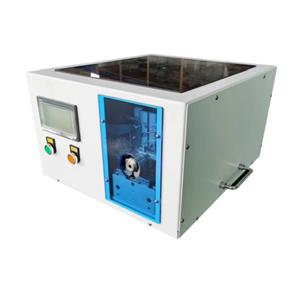
The latest O-ring assembly machine combines automated component handling, precision positioning, controlled installation, and intelligent process management into a compact industrial automation solution. By replacing repetitive manual operations with a controlled production process, the O-ring assembly machine helps manufacturers standardize assembly quality and improve production efficiency.
The development of advanced automatic O-ring installation technology has become particularly important for customers whose products require stable sealing performance. The O-ring assembly system is designed to support accurate assembly while minimizing common problems such as missing seals, incorrect positioning, deformation, twisting, and inconsistent installation.
For manufacturers seeking an automatic sealing assembly machine, the modern O-ring assembly machine offers a practical path toward higher automation and more stable production.
A New Approach to Precision O-Ring Assembly
O-ring assembly looks simple, but the actual process requires precise control. The sealing ring must arrive at the correct position, remain properly oriented, and be installed without damage. The receiving component must also be accurately positioned before the sealing ring is installed.
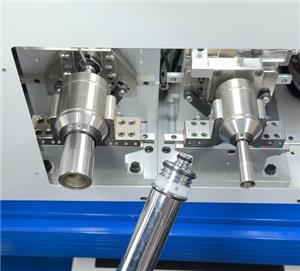
The demonstration video shows the importance of this positioning process. A black industrial component is held in position while a guided tool interacts with the assembly area. The operator demonstration highlights how the sealing or rubber component must be accurately aligned with the receiving structure before installation. This type of process is exactly where an automated O-ring assembly machine can provide significant value.
The automated O-ring assembly machine can standardize this sequence by controlling component feeding, product positioning, assembly movement, and installation timing.
Instead of relying on manual judgment for every part, the O-ring assembly machine establishes a repeatable process. The automatic O-ring installation system can therefore maintain consistent movement from one cycle to the next.
The result is a more stable O-ring assembly system with reduced variation between operators and between production batches.
For manufacturers producing large numbers of sealing products, an automatic sealing assembly machine can transform an operator-dependent process into a controlled manufacturing operation.
Automatic O-Ring Installation for Consistent Production
A major advantage of the O-ring assembly machine is the ability to automate repetitive installation tasks. Manual assembly requires workers to repeatedly pick, position, stretch, and install O-rings. Over long production periods, this can lead to fatigue and inconsistent assembly results.
The automatic O-ring installation process reduces this dependency on manual work.
The O-ring assembly machine can be configured to automatically deliver the O-ring to the assembly position and synchronize the seal with the workpiece. The automatic O-ring installation sequence can then use dedicated tooling to complete the installation in a controlled manner.
This approach provides several manufacturing benefits:
Consistent positioning is maintained from cycle to cycle.
Installation movement can be controlled according to the product design.
The possibility of operator-related variation is reduced.
Production can continue at a stable rhythm.
The O-ring assembly system can also be integrated with inspection functions to confirm that the sealing component has been installed correctly.
For production managers, this means that the O-ring assembly machine is not simply a replacement for manual labor. It becomes an important quality-control tool within the production process.
Advanced Feeding for Difficult O-Ring Applications
One of the most important developments in modern O-ring assembly machine technology is the ability to automate difficult feeding applications.
Standard vibration bowl feeding is widely used for dry O-rings. However, some customers use O-rings that already contain lubricating oil. Oil-coated O-rings can be difficult to handle using a conventional vibration bowl because the sealing rings may stick to each other or move unpredictably.
This creates a challenge for automatic O-ring installation.
The advanced O-ring assembly system can be equipped with a specialized feeding mechanism designed for lubricated sealing rings. This allows an automatic sealing assembly machine to handle O-rings that would otherwise require additional manual handling.
The specialized feeding concept provides a more stable material supply and reduces the risk of feeding interruptions.
For customers using oil-coated O-rings, the O-ring assembly machine therefore provides a more complete automation solution.
The importance of specialized feeding becomes even greater in high-volume production. A small feeding problem repeated thousands of times can quickly become a major production bottleneck. By improving feeding stability, the O-ring assembly machine helps manufacturers maintain a smoother production process.
Precision Lubrication During O-Ring Assembly
In many sealing applications, lubrication is not an optional step. It can be an important part of the installation process.
The correct amount and distribution of lubricant can affect installation smoothness, sealing behavior, and production consistency. When lubrication is performed manually, differences between operators can create significant variation.
The advanced O-ring assembly machine can therefore incorporate controlled lubrication technology into the automatic O-ring installation process.
A precision lubrication mechanism can help control the quantity and position of lubricant applied during assembly. This makes the O-ring assembly system particularly suitable for customers with demanding requirements for lubrication uniformity.
A controlled lubrication process provides several potential advantages:
More consistent assembly conditions.
Reduced variation between production batches.
Improved control of lubrication quantity.
Reduced operator dependency.
Better process repeatability.
When integrated with an automatic sealing assembly machine, controlled lubrication allows manufacturers to combine feeding, lubrication, positioning, and installation into one production sequence.
The result is a more complete O-ring assembly machine solution for demanding industrial applications.
Precision O-Ring Assembly Improves Product Reliability
The quality of an O-ring is only one part of sealing performance. The installation process is equally important.
An O-ring can be damaged during installation if it is stretched excessively, twisted, cut, or positioned incorrectly. Even when the O-ring itself meets quality requirements, an unstable installation process can create defects in the final product.
The precision O-ring assembly function of an advanced O-ring assembly machine is designed to minimize these problems.
Dedicated tooling can guide the O-ring into its required position while the workpiece is held securely. Controlled movement can help reduce unnecessary deformation and improve repeatability.
The automatic O-ring installation process can also be combined with sensors or inspection systems to detect missing or incorrectly installed seals.
This makes the O-ring assembly system an important part of modern quality assurance.
Manufacturers can therefore use the O-ring assembly machine not only to increase production speed but also to improve the consistency of finished products.
For sealing applications where leakage prevention is critical, stable precision O-ring assembly can contribute significantly to overall product reliability.
High-Efficiency O-Ring Assembly for Large-Scale Manufacturing
Manufacturers operating large production lines need equipment that can maintain stable performance over long operating periods.
The O-ring assembly machine is designed for automated repetitive production, allowing the same controlled process to be repeated across large quantities of products.
The automatic O-ring installation sequence can be synchronized with material feeding and workpiece handling, creating a stable production rhythm.
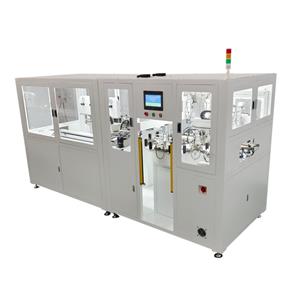
For high-volume manufacturing, the O-ring assembly system can be integrated into a larger production line. Depending on the application, upstream and downstream equipment can be added for feeding, inspection, testing, handling, or packaging.
The flexibility of the automatic sealing assembly machine allows manufacturers to build automation around their specific production process.
This is particularly valuable for manufacturers producing sealing components for automotive, hydraulic, pneumatic, cooling, and industrial products.
The O-ring assembly machine therefore becomes a scalable automation platform rather than a single-purpose assembly tool.
Applications Across Multiple Industrial Sectors
The versatility of the O-ring assembly machine makes it suitable for a wide range of industrial applications.
In automotive manufacturing, the automatic O-ring installation process can be used for sealing components, fluid connections, cooling assemblies, and other precision parts.
In hydraulic and pneumatic manufacturing, the O-ring assembly system can support automated installation of seals used in valves, connectors, actuators, and fluid-control products.
For liquid cooling products, the O-ring assembly machine can help automate the installation of sealing components in cooling connections and related assemblies.
In electronic and electrical applications, related sealing technologies can include waterproof rubber rings, sealing plugs, grommets, rubber sleeves, and waterproof connectors.
The same basic automation principle—controlled feeding, positioning, and assembly—can be adapted for different sealing products.
This flexibility allows the automatic sealing assembly machine to support different product families while maintaining consistent production standards.
Automation for Waterproof Sealing Components
Waterproof products require particularly reliable sealing assembly.
Waterproof rubber rings, grommets, sealing plugs, rubber sleeves, and waterproof connectors are widely used to prevent moisture and contaminants from entering sensitive electrical or mechanical components.
The production of these products often requires consistent positioning and repeatable assembly quality.
An O-ring assembly machine or related automatic sealing assembly machine can automate these processes and reduce variation caused by manual assembly.
The automatic O-ring installation principle can be adapted to different rubber sealing components according to product geometry and assembly requirements.
This makes the O-ring assembly system relevant not only to conventional O-rings but also to broader sealing-component automation.
For high-volume production, automated sealing assembly can help manufacturers maintain a consistent production standard across thousands of parts.
Reducing Labor Dependency and Production Variation
Manufacturers around the world are looking for practical ways to reduce repetitive manual operations.
The O-ring assembly machine provides a direct solution by automating one of the most repetitive tasks in sealing-component manufacturing.
The automatic O-ring installation process reduces the number of manual operations required for each product.
The O-ring assembly system can also standardize the sequence between feeding, positioning, lubrication, and installation.
An automatic sealing assembly machine therefore provides both productivity and process-control benefits.
Reduced manual intervention can also help manufacturers address worker fatigue and difficulties associated with recruiting operators for repetitive assembly jobs.
For factories seeking production efficiency improvement, the O-ring assembly machine represents a practical automation upgrade.
Easy Operation and Flexible Manufacturing
Automation equipment must be capable of operating efficiently while remaining practical for production teams.
The O-ring assembly machine can be designed with a user-friendly control interface that allows operators to manage production settings and monitor operating status.
Tooling and feeding components can be configured according to individual product requirements.
This flexibility makes the O-ring assembly system suitable for customers handling multiple products or product variations.
An automatic sealing assembly machine can also be integrated into an existing production line, providing manufacturers with a gradual path toward greater automation.
The modular approach allows customers to develop the O-ring assembly machine around actual production requirements rather than forcing the factory to adapt its entire process to one fixed equipment configuration.
Supporting the Future of Intelligent Manufacturing
The future of industrial manufacturing is moving toward more connected, flexible, and intelligent equipment.
The O-ring assembly machine is well positioned to become part of this development.
Future automatic O-ring installation solutions can combine machine vision, sensor feedback, intelligent inspection, process data collection, and predictive maintenance.
The O-ring assembly system can become increasingly connected with manufacturing execution systems and other smart-factory platforms.
The automatic sealing assembly machine can therefore evolve from a standalone mechanical device into an intelligent manufacturing workstation.
As manufacturers seek higher productivity and better traceability, the importance of intelligent assembly technology will continue to increase.
A More Reliable Path to Automated Sealing Assembly
The development of the modern O-ring assembly machine reflects a broader change in manufacturing philosophy.
Instead of relying primarily on operator experience, manufacturers can use automation to establish repeatable processes.
The automatic O-ring installation system creates a controlled sequence for feeding and installing sealing components.
The O-ring assembly system provides a framework for integrating lubrication, inspection, and handling functions.
The automatic sealing assembly machine makes it possible to automate repetitive sealing processes while improving production stability.
For oil-coated O-rings, specialized feeding technology can overcome the limitations of conventional vibration feeding.
For customers requiring consistent lubrication, controlled lubrication technology can improve process repeatability.
For high-volume manufacturing, automated precision O-ring assembly can improve both efficiency and product consistency.
Conclusion
The latest O-ring assembly machine represents an important step forward in automated sealing-component manufacturing.
By integrating automatic O-ring installation, specialized feeding, precision positioning, controlled lubrication, and repeatable assembly processes, the O-ring assembly system provides manufacturers with a more efficient and reliable approach to sealing production.
The ability to handle difficult applications such as oil-coated O-rings further expands the potential of the O-ring assembly machine.
At the same time, precision lubrication and controlled installation can help customers achieve the level of consistency required for demanding sealing applications.
Whether used for automotive components, hydraulic and pneumatic products, liquid cooling systems, waterproof connectors, sealing plugs, grommets, rubber sleeves, or other industrial sealing products, the automatic sealing assembly machine offers a practical route toward greater automation.
As global manufacturing continues to pursue higher productivity, lower labor dependency, and improved product consistency, the O-ring assembly machine will remain an important technology for the next generation of intelligent manufacturing.