
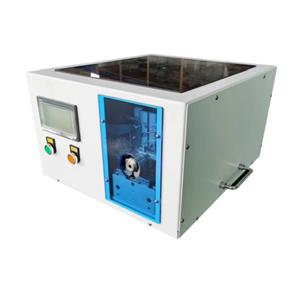
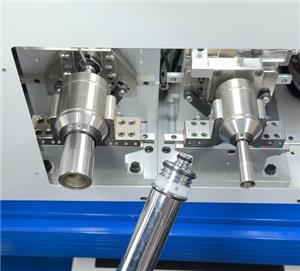
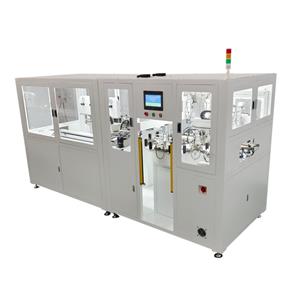
Oil-Coated O-Ring Assembly Machine Solves Feeding and Lubrication Challenges in Automated Sealing Production
Automation Meets a Difficult Material-Handling Problem
Many manufacturers want to automate O-ring installation but encounter a practical problem before assembly even begins: feeding. Dry O-rings can often be handled with conventional vibratory bowl technology, but oil-coated O-rings behave differently. Their surfaces can become more prone to sticking, overlapping, and unstable movement, making conventional automatic feeding difficult.
The oil-coated O-ring assembly machine is designed around this challenge. By using a specialized feeding structure instead of relying only on a standard vibration bowl, the O-ring assembly system can support automated handling of lubricated sealing rings. This creates an important bridge between material preparation requirements and high-volume automation.
Why Oil-Coated O-Rings Are Challenging to Feed
When a sealing ring already contains oil, the surface characteristics of the ring change. A feeding method that works for dry rubber may not provide the same reliability for a lubricated component. Rings may move together, fail to separate cleanly, or enter the feeding path in an unstable orientation.
These feeding problems can become more costly as production volumes increase. A small interruption repeated throughout the day can affect equipment utilization, labor efficiency, and production schedules. The specialized O-ring assembly machine addresses the problem by treating feeding as an integrated part of the assembly process rather than an afterthought.
Specialized Automatic O-Ring Feeding for Lubricated Seals
The automatic O-ring installation process begins with controlled material delivery. The specialized oil-coated O-ring feeding system is designed to transport lubricated rings in a more stable manner, helping individual components reach the assembly station with less manual intervention.
This approach creates a more consistent production rhythm. The O-ring assembly machine can synchronize feeding with positioning and installation, reducing the risk that an unstable supply of rings will interrupt the main assembly sequence. For customers whose products require pre-lubricated O-rings, this feature can be one of the most important steps toward full automation.
The result is an O-ring assembly system that is better suited to real-world material conditions, including sealing rings that cannot be treated as completely dry components.
Precision Lubrication Control During Assembly
Some products require the O-ring to receive lubricant during installation rather than arrive fully pre-lubricated. In these applications, uniform lubrication becomes a critical process requirement. Too little lubricant can increase installation resistance, while inconsistent application can create variation between products.
The precision lubrication control function of the O-ring assembly machine provides a controlled approach to this process. Lubricant can be applied at a defined stage of automatic O-ring installation, helping maintain more consistent conditions from cycle to cycle.
For customers with particularly high expectations for lubrication uniformity, precision lubrication control can be integrated as part of the O-ring assembly system. This eliminates much of the variability associated with manual lubrication and creates a clearer, more repeatable process standard.
From Lubrication to Installation Without Manual Rework
A major benefit of an integrated O-ring assembly machine is the ability to connect multiple process steps. In a manual workflow, an operator may need to select an O-ring, lubricate it, position it, and install it, with each step creating another opportunity for variation.
With automatic O-ring installation, these steps can be linked into one automated sequence. Specialized feeding provides the ring, precision lubrication controls the lubrication stage where needed, and the assembly tooling completes installation. The O-ring assembly system therefore reduces unnecessary transfers and limits the number of points where manual intervention is required.
Stable Installation Protects the Sealing Component
O-rings must maintain their intended geometry and sealing surface during installation. An uncontrolled assembly motion can stretch or twist the ring, while incorrect alignment can cause incomplete seating or damage.
The O-ring assembly machine can use guided tooling and controlled positioning to stabilize the component during automatic O-ring installation. This supports repeatability and helps reduce installation-related variation. The precision O-ring assembly approach is especially valuable when a product has a narrow assembly window or when the seal must be installed into a compact groove.
Production Efficiency at Scale
Automation becomes increasingly valuable when the same sealing process must be repeated thousands of times. Product information for this equipment indicates output of up to 1,200 pieces per hour, depending on the specific product and process configuration. This provides a reference point for high-volume production planning while the actual cycle rate can be defined by the workpiece and assembly requirements.
The oil-coated O-ring assembly machine is not only about speed. Its value also comes from repeatability. When feeding, lubrication, and installation are synchronized, production can run with fewer manual interruptions and more predictable cycle behavior.
Applications for Demanding Sealing Products
The automatic O-ring installation platform can serve products in automotive, hydraulic, pneumatic, electronic, cooling, and industrial manufacturing. It can also support related waterproof sealing components where the process requires automatic material handling and controlled installation.
Liquid coolers, connectors, valves, compressors, sensors, and fluid fittings can all include sealing components that depend on repeatable O-ring installation. The O-ring assembly machine can be customized around the geometry, lubrication condition, and production workflow of the individual component.
Quality Control and Process Consistency
For manufacturers, automation is also a quality strategy. A consistent O-ring assembly machine process provides a controlled baseline against which abnormal results can be detected. Sensors and inspection mechanisms can be added where needed to confirm the presence, position, or installation condition of the sealing component.
Precision lubrication control strengthens this quality approach by making lubrication another defined process variable. When the feeding condition and lubrication condition are controlled, the O-ring assembly system can deliver a more stable overall assembly process.
Reducing Manual Labor and Operator Dependency
Manual sealing work requires repetitive handling and can be difficult to standardize over a long shift. The oil-coated O-ring assembly machine reduces these demands by automating material movement and installation.
Automation can also make production planning more predictable. Instead of assigning operators to repeated individual installations, the production team can manage an automated cell with defined material replenishment and inspection tasks. This changes the role of the operator from repetitive assembler to production supervisor, improving the utilization of human resources.
Easy Operation for Production Teams
An industrial O-ring assembly machine must be practical as well as technically capable. The equipment can incorporate operator controls for setting and monitoring production parameters, while the automated sequence manages repetitive motions.
This is particularly useful when production teams handle multiple O-ring specifications or product models. Process parameters can be adjusted according to the workpiece, while the core automatic O-ring installation workflow remains standardized.
A Flexible Path to Full Automation
Not every factory can move directly from manual production to a fully integrated automated line. The O-ring assembly system provides a scalable step because it can automate the most critical sealing process first and then connect with upstream and downstream equipment as the factory evolves.
For lubricated O-rings, the specialized feeding mechanism addresses a common barrier to automation. For products that require added lubricant, precision lubrication control brings another manual step under automated process management. Together, these capabilities create a flexible automation platform.
Conclusion
The oil-coated O-ring assembly machine addresses two of the most difficult problems in modern sealing automation: feeding lubricated O-rings and maintaining consistent lubrication during installation. By treating feeding, lubrication, positioning, and assembly as one coordinated process, the O-ring assembly system provides a practical solution for manufacturers seeking repeatable production.
With automatic O-ring installation, precision lubrication control, flexible application capability, and high-volume production potential, the equipment can support a wide range of industrial sealing applications. It helps manufacturers reduce repetitive manual work, improve process stability, and move toward more intelligent production.
Engineering Around Lubricated Material Behavior
Oil-coated O-rings require a different automation strategy because lubrication changes how the rings interact with one another and with the feeding surface. The oil-coated O-ring assembly machine is designed around this practical fact. Rather than assuming that every ring can be separated by conventional vibration, the O-ring assembly system can use specialized mechanisms to create a more controlled material path.
This design philosophy is important for factories that already specify lubricated sealing rings for their products. The goal of automatic O-ring installation is not to change the customer’s required material condition, but to automate the handling of that condition reliably.
Feeding Stability as a Production Requirement
Feeding is often the first bottleneck in an automated assembly process. If the O-ring assembly system cannot present one ring at a time, the downstream installation station cannot maintain a stable cycle. A specialized oil-coated O-ring feeding mechanism therefore becomes a critical part of the automatic O-ring installation process.
Stable feeding also helps protect downstream equipment. Fewer overlaps, double feeds, and interruptions make it easier for the assembly tooling to operate within its intended sequence. In high-volume production, this stability can have as much practical value as nominal machine speed.
Lubrication Uniformity and Quality Standards
Customers who require especially uniform lubrication during O-ring assembly need control over more than the presence of lubricant. They may need consistency in quantity, location, and timing. A precision lubrication control process allows the O-ring assembly machine to treat lubrication as a defined manufacturing parameter rather than a manual preparation step.
When lubrication is standardized, the automatic O-ring installation sequence becomes more repeatable. The O-ring assembly system can move the workpiece from lubrication to installation under defined conditions, reducing variation that might otherwise appear between operators or shifts.
Integration With Inspection
An oil-coated O-ring assembly machine can also benefit from inspection strategies that confirm the result of the process. Depending on the product, sensors or vision-based inspection can be configured to check seal presence, positioning, or other visible conditions. This creates a closed loop between feeding, assembly, and quality management.
The benefit is greater process transparency. When the O-ring assembly system records abnormal conditions, production teams can distinguish between a feeding problem, a lubrication issue, or an installation issue. This makes troubleshooting more systematic and helps maintain automatic O-ring installation stability.
Flexible Application Across Sealing Products
Although the main focus is the O-ring assembly machine, the same automation principles can apply to related sealing products. Hydraulic fittings, pneumatic connectors, valves, compressors, sensors, liquid-cooling components, and other fluid-handling products can use sealing rings with different size and lubrication requirements.
The ability to customize feeding and tooling makes the automatic O-ring installation platform suitable for multiple product families. For manufacturers with several sealing SKUs, this flexibility can reduce the need for separate manual workstations and create a more unified O-ring assembly system.
Production Economics
The commercial value of the O-ring assembly machine comes from the interaction between speed, quality, and labor use. Product information supplied for the system indicates efficiency of up to 1,200 pieces per hour depending on the product. For a factory, the appropriate cycle rate should be established through product trials, tooling validation, and quality testing rather than by speed alone.
The automatic O-ring installation process can also lower the amount of manual handling required for every workpiece. When combined with stable oil-coated feeding and controlled lubrication, the O-ring assembly system can help create a production cell with a more predictable labor requirement.
Future-Ready Automation
As smart manufacturing expands, difficult material-handling problems are becoming important targets for automation. Oil-coated O-rings are a good example: the challenge is not simply to move a component faster, but to design a feeding and assembly process around its real physical condition.
The O-ring assembly machine can evolve with this requirement through improved sensing, data collection, adaptive feeding, and machine vision. Future automatic O-ring installation systems can provide more process feedback while retaining the mechanical reliability required for high-volume manufacturing.
Handling Conditions Before the Assembly Cycle
The condition of the O-ring before it reaches the assembly station is an important part of the process. When the ring is already lubricated, the O-ring assembly machine must maintain a stable material path without allowing excessive sticking or overlapping. Specialized feeding becomes especially useful here because the feeding mechanism must accommodate the real surface condition of the ring rather than assume dry material behavior.
For production teams, this means the automatic O-ring installation process begins before the ring reaches the final tooling. A stable O-ring assembly system coordinates material presentation with the timing of the installation station, helping the complete line operate with fewer interruptions and less manual recovery work.
Process Validation for Lubrication-Dependent Products
When lubrication is a critical product requirement, process validation should consider both the lubricant condition and the assembly result. The O-ring assembly machine can be configured so that precision lubrication control forms a defined step in the automatic O-ring installation sequence. This creates a clearer relationship between lubrication quantity, installation movement, and final assembly quality.
The resulting O-ring assembly system can support a more disciplined validation process. Production teams can compare lubrication settings, installation behavior, and inspection results before releasing the process to full-scale manufacturing. This helps manufacturers establish a repeatable production standard instead of relying on manual trial and error.
Supporting Multi-Product Production
Manufacturers often need to produce multiple sealing products on the same production line. Different O-ring sizes, materials, groove dimensions, and workpiece geometries can create different assembly requirements. The oil-coated O-ring assembly machine can therefore be configured with product-specific tooling and controlled parameters so that automatic O-ring installation remains repeatable across product variants.
This flexibility can improve equipment utilization. Instead of creating a separate manual station for every product family, one O-ring assembly system can be adapted to multiple programs when the underlying process is compatible. This makes the assembly machine a more scalable investment for factories with changing product portfolios.
Engineering Service and Application Development
Difficult feeding applications are often solved through application engineering rather than by selecting a standard machine from a catalog. The oil-coated O-ring assembly machine can be developed around the customer’s ring condition, workpiece geometry, lubrication requirement, and cycle target. This allows the automatic O-ring installation sequence to be validated against the actual product.
Application development is especially important where precision lubrication control is required. The O-ring assembly system should be evaluated not only for whether it can install the ring, but also for whether feeding, lubrication, positioning, and installation can remain stable over the intended production volume.
A Practical Upgrade From Manual Assembly
For factories currently using manual O-ring assembly, automation can be introduced around the most repetitive and quality-sensitive steps. The O-ring assembly machine provides a controlled platform for feeding and installation, while operators remain responsible for supervision and material handling.
The result is a gradual transition from manual assembly toward a more standardized production method. Automatic O-ring installation can reduce repetitive handling, while the specialized oil-coated O-ring feeding solution addresses one of the most common barriers to sealing automation.
Reducing Rework Through Controlled Assembly
A stable O-ring assembly machine can also reduce the need for manual recovery work. When an oil-coated O-ring is fed consistently and the lubrication process is controlled, operators spend less time correcting feeding interruptions or reworking improperly assembled parts. This allows the automatic O-ring installation cycle to remain focused on production rather than repeated manual correction.
For quality teams, controlled feeding and precision lubrication control provide clearer process conditions. The O-ring assembly system can therefore help reduce variation at the source and support more predictable production results across shifts, operators, and product batches.
Practical Benefits for Quality and Production Teams
The practical benefit of the oil-coated O-ring assembly machine is that difficult sealing operations become easier to define and repeat. Feeding, lubrication, and installation can be treated as measurable process steps, allowing production teams to manage them with a common standard. This supports stable automatic O-ring installation even when the material condition differs from a conventional dry O-ring.
For manufacturers, that process discipline can reduce rework and make output planning easier. The O-ring assembly system creates a repeatable workflow that can be monitored, maintained, and optimized as production requirements change.
A Controlled Route to Higher Output
For manufacturers, the strongest value of the oil-coated O-ring assembly machine is the combination of stable feeding and repeatable automatic O-ring installation. By controlling the material path and the lubrication process, the O-ring assembly system can help production teams build a more predictable assembly cell and prepare for higher output without returning to manual handling.